On Christmas Eve in San Angelo, Texas, a young Carol Constancio saw something that would change her life. Riding to a family party with her aunt, she noticed a man sitting alone on a street curb.
“Mija, he might not have a house. He’s homeless,” her aunt replied gently.
“But everyone has a family,” Carol said. “Everybody needs somebody. It’s Christmas.”
Her aunt’s words lingered long after that night, revealing a truth she wouldn’t fully understand until years later—love, protection, and warmth weren’t guaranteed.
It was that truth that shaped who she is today: a woman determined to make sure fewer people ever felt that kind of isolation, particularly in the place meant to keep them safe—home.
Even through her own heartbreaks and losses, Carol’s commitment has never wavered. Her purpose is simple yet profound—to help others find safety, hope, and the strength to begin again.
A calling takes shape
In 2000, Carol joined the Family Shelter of San Angelo–formerly NewBridge Family Shelter–marking the beginning of her life’s work. Since then, she and her team have helped countless families find safety, resources, healing, and hope with the support of their community.
After 25 years with the shelter–and now serving as its director–not a day goes by that she doesn’t think about that first case. October is Domestic Violence Awareness Month, a time for reflection–honoring those who’ve lost their lives and celebrating the survivors fortunate enough to escape.
And as the month comes to a close, the work continues.

Over the years, Carol has seen thousands of faces come through those doors, but none as unforgettable as her first.
On that day, she was excited and nervous to work the 24-hour hotline. Knots tightened in her stomach when she took her first call at 2:30 a.m. from the Tom Green County Sheriff’s Office Crisis Intervention Unit. They told her they were bringing a woman and her two young children to the shelter. She’d been severely beaten.
Watching the cameras as the car pulled up, Carol prepared herself. When she opened the door, the woman’s tears spilled over.
“She had a little boy, between 5 and 6, and a little girl about 3 or 4,” Carol recalled. “She looked at me and asked, ‘Can my children tell that I’m beat?’ I told her, ‘Ma’am, yes. They can see.”
The woman collapsed into sobs. Carol wrapped her arms around her and the children—soft, steady, safe.
“I said to myself again that night: this is my calling.”
The silent victims
Carol understands those children in a way few others can. She’s a survivor herself.
“I know what these children are going through,” she says. “A lot of people say, ‘They don’t know,’ ‘They weren’t there,’ or ‘They didn’t hear it.’ But that child’s in another room hearing everything. They’re hiding under the bed. They’re hiding in the closet. They’re scared to death.”
She adds that even babies in the womb can feel the violence. And she’s right–the science backs her up.
Scope of the crisis
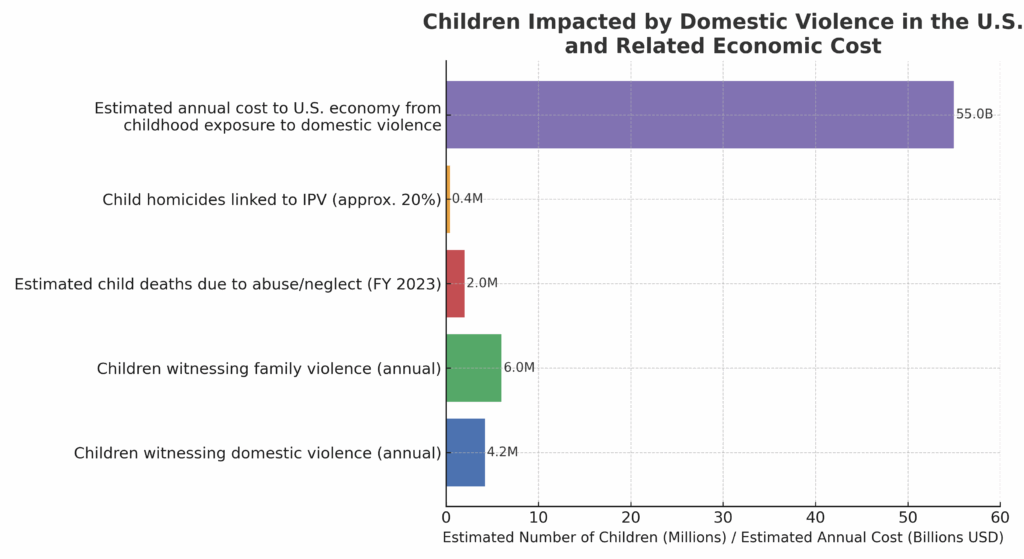
Each year, millions of children in the United States live with violence in their homes. Recent national data reveals that more than 5% of children—approximately 4.2 million—witness a parent assault a partner annually, and roughly 8% witness other forms of family violence.
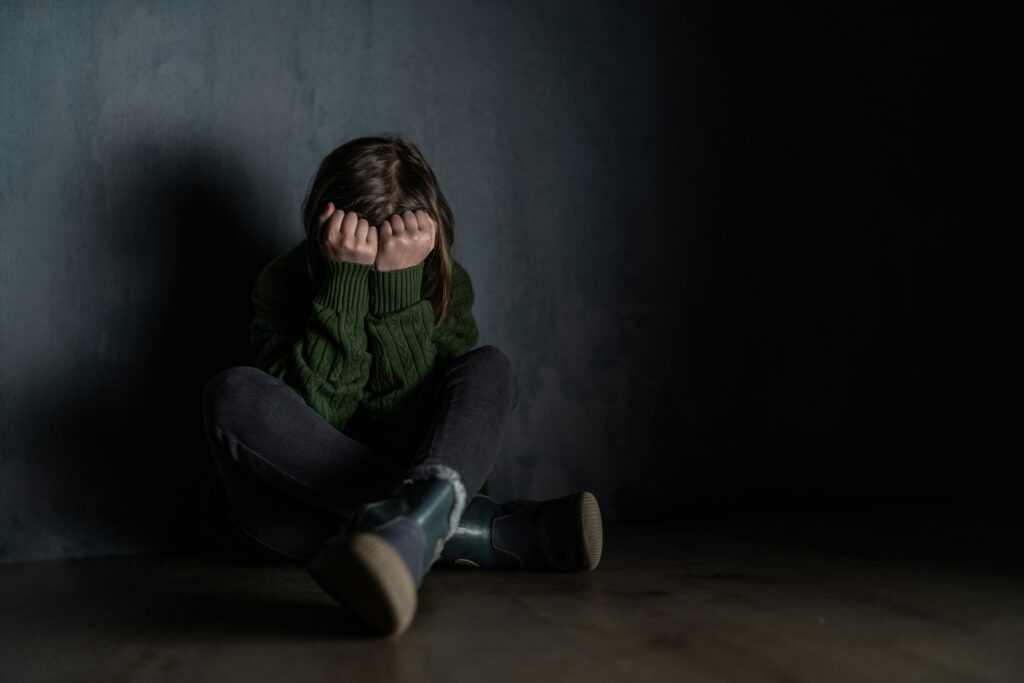
These children are not passive observers. Exposure to violence alters their brain development, emotional regulation, school performance, and health outcomes well into adulthood.
“The children are really close to my heart,” Carol says. “They are the silent voices.”
Trauma before birth
Domestic violence doesn’t begin or end with birth. Babies in the womb are directly affected by the stress and trauma their mothers endure.
According to a Centers for Disease Control and Prevention (2024) report, intimate-partner violence (IPV) during pregnancy increases risks of preterm birth, low-birth weight, and hypertension.
The American College of Obstetricians and Gynecologists (ACOG, 2023) recommends IPV screening every trimester and postpartum, because of consistently documented links to poor maternal and neonatal outcomes.
When violence enters a home, everyone pays the price.
Why community matters
Children who grow up amid domestic violence often carry invisible scars—hypervigilance, anxiety, depression, and difficulty forming healthy relationships.
Recognizing their trauma is the first step toward breaking generational cycles. Early intervention and compassionate community response save lives.
“We’re their voice,” Carol says. “We try to plant that seed in their little heads that this is not normal life. We provide as many services to the children as we do adults.”
Federal data shows that roughly 2,000 children die from abuse or neglect each year (Child Maltreatment 2023). Research suggests as many as one in five child homicides occur in the context of intimate partner violence.
One life is too many.
Remembering the lives lost
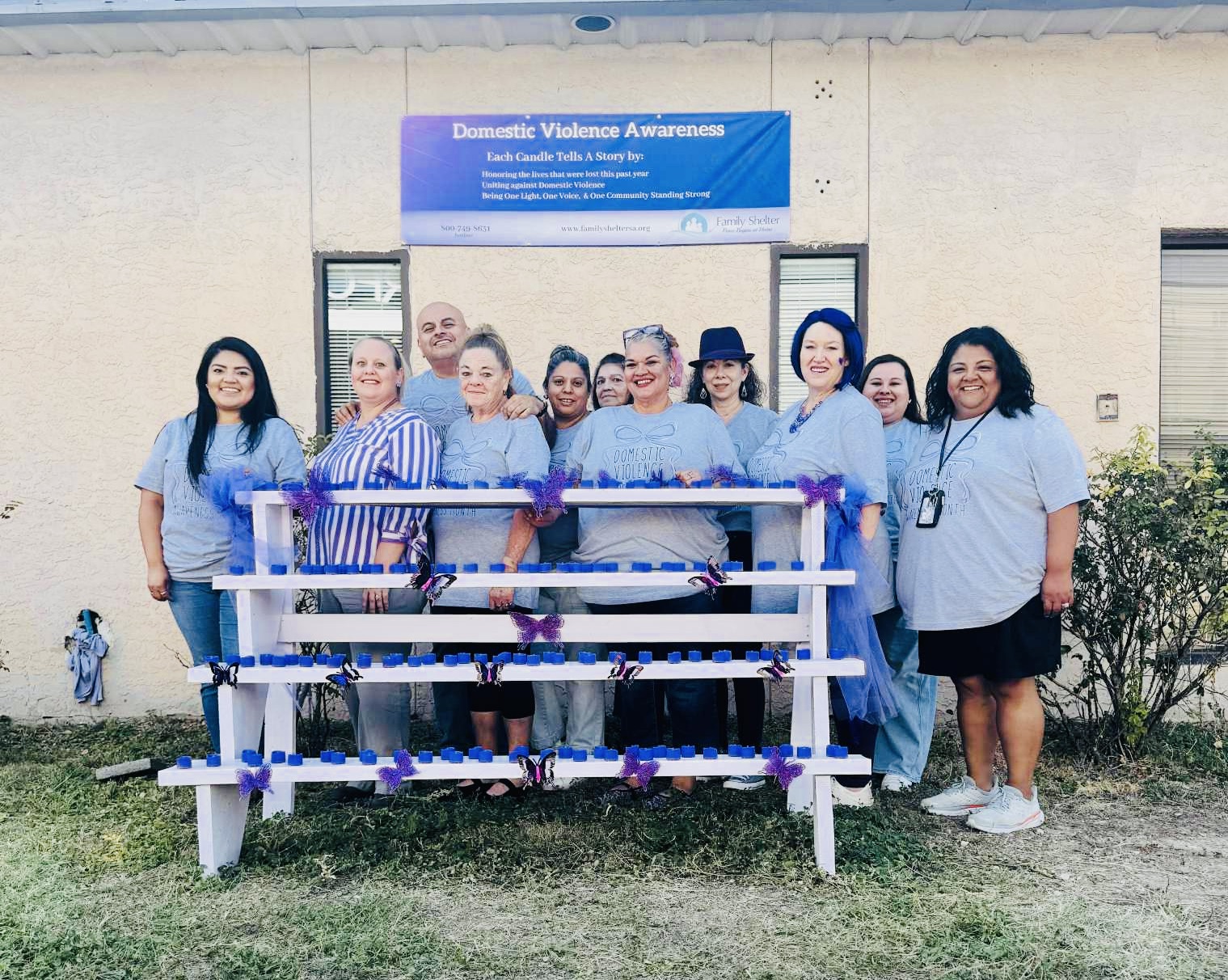
To kick off Domestic Violence Awareness Month, the San Angelo Shelter launched its first-ever butterfly release–honoring survivors, families, and the lives cut short.
In Texas alone, there were 205 fatal intimate-partner or stalking homicides in 2023, including 16 bystanders (Texas Council on Family Violence). Victims ranged in age from 15 to 88.
Preliminary data shows 161 deaths statewide in 2024.
“It’s unfortunate,” Carol says. “We have to light 161 candles because they’re not here anymore. They’re not going to be at your Thanksgiving table or Christmas dinner. They’re gone–because of domestic violence.”
Why leaving is hard
The public often asks, Why don’t they just leave?
Carol says it’s never that simple.
“It can take a victim up to seven times, leaving and returning, before they break away for good,” she explains.
Financial dependence, isolation, fear, and manipulation all create barriers. Many survivors must assume new identities just to stay alive.
And domestic violence doesn’t discriminate. It crosses class lines, zip codes, and professions.
“It can be happening on your street. To your coworker. To your parent. Anywhere.”
A space for hope
Carol has a message for those ready to take the leap:
“There is always someone there to help. You’re just a phone call away from hell. No matter what that person has told you to prevent you from leaving, there’s help. You just have to find a way and get with somebody, get with an advocate–somebody who is an expert in domestic violence. Tell them that you need help.”
The San Angelo Shelter is open 24 hours a day, serving 15 counties, and they even receive calls from California, New York, and Arizona. People trying to escape abusive situations often want as much distance as possible.
“We’re here, and the resources are on a silver platter,” Carol says. “It’s up to you to reach out and grab them. Is it going to be easy? No. It’s not fair, but you’ll come out on top. We’ll get you through this. I won’t lie. Our doors are always open.”
Strength through tragedy
This year, Carol suffered an unimaginable loss: her granddaughter Ari passed away from Juvenile Onset Huntington’s Disease (JHD). She buried her eldest granddaughter and Ari’s sister, Khloe, just two years prior.
During this time of mourning and grieving, being present for DV victims—along with her daughter Natalie—has been a challenge. But thanks to the outpouring of love and support from family and community, Carol is fighting through.
“My support system has been incredible,” Carol says. “My employees, my boss—they’re amazing. Knowing other people are here to support us is the best feeling.”
Also, watching her daughter advocate for a cure–despite her crushing grief–is the fuel that propels Carol forward in her lifelong mission.
The fight continues
In her 50s, Carol embodies the spirit of a true Jefita—steady, rooted, protective. She reminds us that the fight against domestic violence doesn’t belong to October alone. It belongs to every single month.
And here’s her hope:
If you need help
If you or someone you know is experiencing domestic violence, please contact:
National Domestic Violence Hotline
📞 1-800-799-SAFE (7233)
📱 Text “START” to 88788
💻 thehotline.org
You are not alone.
Your story does not end here.
You are worth safety.